Mobile Tooth Extractions Southern California
Your House Call Dentist in Southern California
Tooth Extractions Brought Right to the Patient, Across Southern California
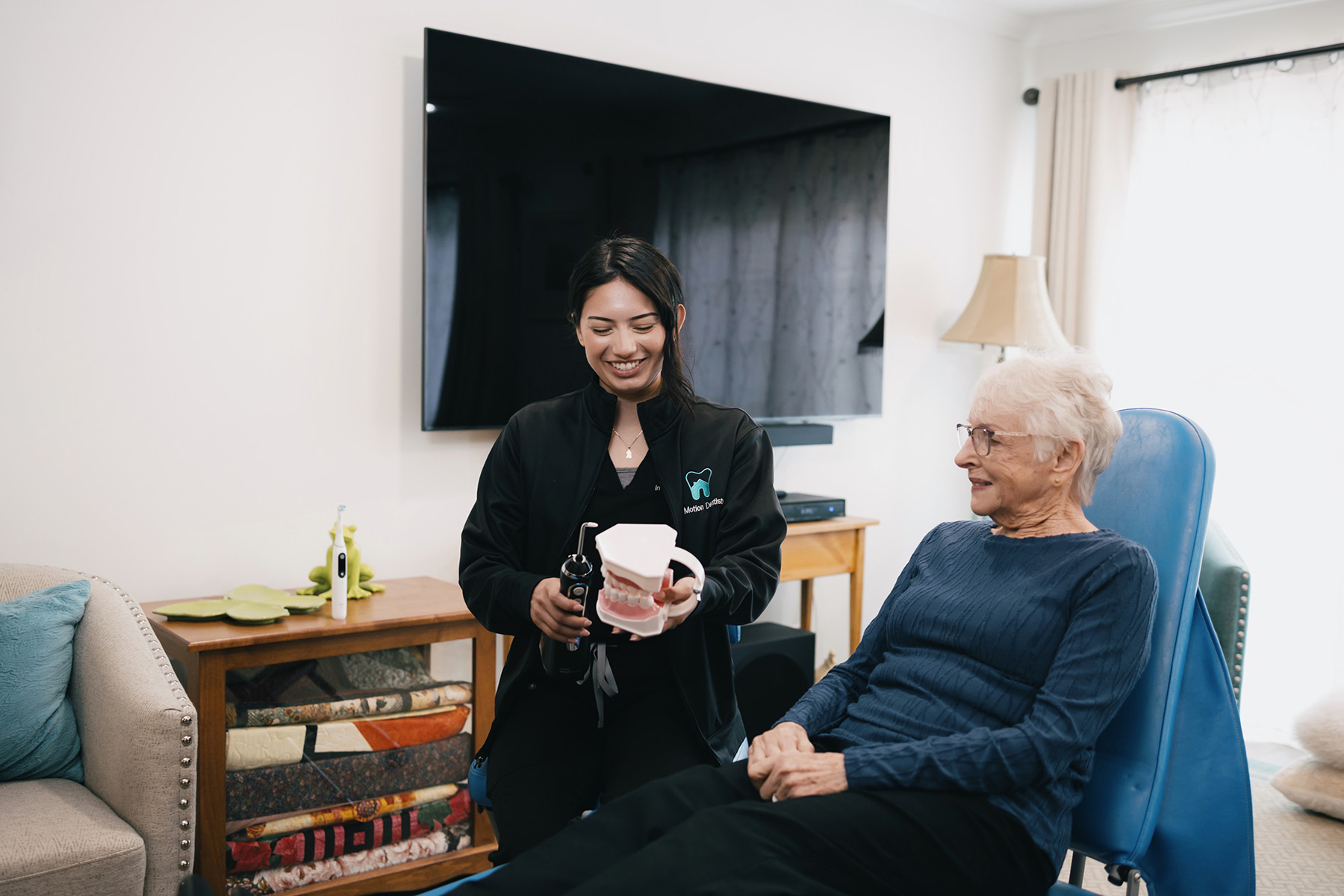
When someone you care for needs a tooth removed but getting them to a dental office feels impossible, there's a better way. Dr. Wade Banner and the team at In Motion Dentists bring tooth extractions directly to the patient, in a private home, an assisted living apartment, or a memory care room. We take care of the tooth that's causing pain, infection, or trouble eating, right where your loved one feels safest.
We focus on seniors and adults with physical or intellectual disabilities throughout Los Angeles County, Orange County, and San Diego County. If transportation, anxiety, or a complex medical situation has put the dentist out of reach, this is exactly the kind of house call dentistry we built our practice around. To talk it through, call us at (626) 594-0374.
Quick Takeaways
- We come to the patient. Many extractions can be done in the home using professional portable equipment and the same clinical standards you'd expect anywhere.
- It starts with a conversation. Before we plan anything, we ask about the patient's health, medications, mobility, and the tooth itself.
- Ask what's realistic at home. Most straightforward extractions are a good fit; some complex cases belong in a surgical office, and we'll say which is which.
- Think one step ahead. If the gap needs filling, we can talk through dentures or other replacements during the same visit.
- Pricing is plain. We're a fee-for-service practice, we share costs upfront, and financing is available through Cherry.
How a Home Extraction Actually Works
A house-call extraction is a real, structured dental appointment. Here's how it generally goes:
- Evaluation first. We examine the tooth, take digital X-rays with portable equipment, and review the patient's medical history and medications. That tells us whether the tooth can come out safely at home.
- Numbing for comfort. We use local anesthetic so the area is fully numb. Most patients feel pressure during the procedure, but not pain.
- The removal. A tooth that's intact and easy to reach we gently loosen and lift out. One that's broken below the gumline takes a more involved approach, and we work carefully within the patient's limits.
- Settling the site. We place gauze, confirm the bleeding is controlled, and walk you through aftercare before we pack up.
We don't rush. For someone living with dementia, anxiety, or several medical conditions at once, that calmer pace in a familiar room often makes the whole thing far easier than a hurried office visit.
Why a Needed Extraction Is Worth It
Pulling a tooth is never the first choice. But when a tooth truly can't be saved, taking it out does real good:
- It stops the pain. A badly decayed or infected tooth can cause constant discomfort. Removing it ends that.
- It clears out infection. An infected tooth left in place lets the problem spread to surrounding teeth, gums, and bone. Taking it out protects what's healthy.
- It makes eating easier. With the painful tooth gone, comfortable chewing and better nutrition often follow.
- It eases daily distress. For seniors who can't always say what hurts, removing the source of pain can quiet agitation, restlessness, and resistance to care.
- It sets up what comes next. An extraction is often the first move toward a denture or a bridge.
Who This Is Right For
An extraction may be the right path when a tooth is decayed beyond saving, badly broken, loose from gum disease, or infected and causing pain. It's also a common first step before fitting dentures. Our home-based extractions are an especially good fit for:
- Seniors who can no longer travel comfortably to an office
- Patients living with dementia, Parkinson's, or a history of stroke
- Wheelchair users and people who are difficult to transfer safely
- Adults with autism, Down syndrome, cerebral palsy, or other disabilities who struggle in a traditional dental chair
- Residents of assisted living, memory care, and skilled nursing communities
Not every case belongs in a home setting. A deeply impacted tooth, a medically fragile patient who needs hospital-level monitoring, or a case that calls for advanced surgery may be safer in a surgical office. When that's the situation, we'll explain exactly why and help arrange a referral to the right place.
What to Expect: Timeline and Visits
Many extractions are finished in a single visit once we've evaluated the tooth. A simple removal often takes around 20 to 45 minutes; a more complicated tooth takes longer. If we're planning a denture or other replacement, we'll usually schedule follow-up visits, and some healing time may be needed before that next step.
The site usually heals over a few days to about two weeks. Most patients feel noticeably better within a couple of days, though recovery can run longer for older or medically complex patients, which is exactly the group our senior dental care is built to support.
Preparing and Caring for the Site Afterward
Before the visit
Have a current list of the patient's medications and medical conditions ready, since blood thinners and certain conditions change how we plan an extraction. Clear a comfortable, well-lit spot where the patient can sit or recline. You don't need to turn your home into a clinic. We bring everything and set up our own clean treatment area when we arrive.
After the extraction
- Keep the gauze in place with gentle, steady pressure for about an hour.
- Stick to soft foods and cool liquids for the first day.
- Skip straws, hot foods, and hot drinks for 24 hours so the blood clot can form and stay put.
- Hold a cold pack against the cheek to ease swelling, and use the pain relief we recommend.
- Follow our instructions for keeping the area clean, and watch for anything that seems off.
If you're a caregiver, we'll make sure you know what to look for and how to keep the patient comfortable. We're a phone call away if anything worries you, and we're happy to talk through ongoing support like our Assisted Teeth Brushing Program.
Cost and Financing
The cost of an extraction depends on the tooth, because a simple removal and a complicated one aren't the same amount of work. We're a fee-for-service practice, and we keep pricing clear. When you call and ask what something costs, we tell you.
Full payment is due at the time of treatment. As a courtesy, we gladly submit claims to your PPO dental insurance so you can collect the maximum reimbursement available. We also offer third-party financing through Cherry, with 0% APR options and no hard credit check, so you can spread payments over time. See the details on our Cherry financing page.
What you're really paying for is care that comes to the door: no transportation, no exhausting transfers, no waiting room, and a team deeply experienced with patients who often have nowhere else to turn.
Why Families Choose In Motion Dentists
We built our practice around reaching the people who have the hardest time getting care: the elderly, the medically complex, and adults living with disabilities. That focus shapes how we handle every extraction.
- Real depth with vulnerable patients. Dr. Banner has spent more than ten years providing house-call dentistry, and our doctors are active leaders in organized dentistry. We show up with a complete portable kit, including digital X-ray and sterile instruments, and we know how to work patiently within medical, behavioral, and environmental limits.
- Care that's genuinely personalized. We adapt to the patient's body, surroundings, and emotional state, and we partner closely with families, caregivers, and facility staff.
- Straight answers. If a tooth shouldn't come out at home, we'll tell you and help you find the right setting. Our loyalty is to what's best for the patient.
Frequently Asked Questions
Can a tooth really be pulled at home?
Yes, for many patients. We bring portable equipment, numb the area properly, and perform the extraction with the same care we'd use in an office. Being in a familiar room often keeps the patient calmer.
Is a home extraction safe for someone who is medically fragile?
For many patients it is, and skipping a stressful trip can actually lower the risk. First, we review the patient's medications and medical history to confirm a home extraction is appropriate. When a case truly belongs in a surgical office, we'll help you get there.
Will my loved one be in pain during the extraction?
The area is fully numbed beforehand, so the procedure itself shouldn't hurt. Most patients notice a sensation of pressure rather than any sharp discomfort. Afterward, we give clear instructions for managing soreness as the site heals.
What happens to the gap after the tooth is removed?
That depends on the tooth and the patient's goals. Some spaces are fine left as they are; others are best filled with a denture or another replacement. We'll walk through the options and can plan that care alongside the extraction.
How soon can you come out?
It starts with a phone call so we can understand the situation and how urgent it is. When a tooth is causing real pain or active infection, we treat it as a priority.
Do you only treat patients in private homes?
Not at all. We regularly care for patients in assisted living communities, memory care, and skilled nursing settings across our Southern California coverage area, in whatever position keeps them comfortable.
Let's Take Care of That Tooth
If a painful or failing tooth has your loved one struggling, you don't have to wrestle them into a car and a waiting room. We'll come to you, evaluate the tooth, explain what's realistic, and handle it with patience and respect, in the room they know best. Whether the next step is a denture or something simpler, we'll walk you through every option.
When you're ready, reach the In Motion Dentists team at (626) 594-0374.
Headquarters